
Evaluating the SanDisk Optimus 7100 1TB NVMe Performance SSD
Serious gamers and creative professionals who need elite 7,250 MB/s speeds and a reliable data recovery plan.
Published by AffiliateHubPro
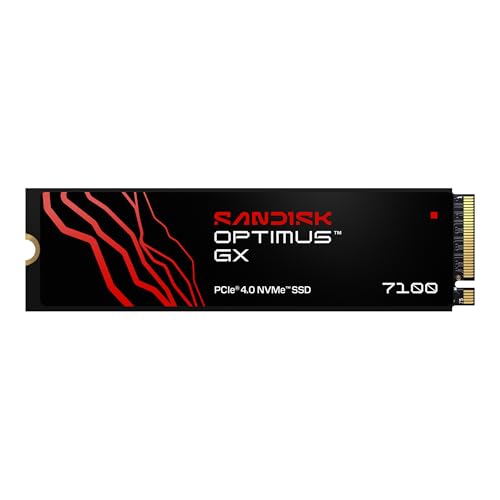
SanDisk 1TB Optimus 7100 NVMe SSD
Affiliate disclosure: we earn a commission if you buy through this link, at no extra cost to you.
The SanDisk 1TB Optimus 7100 NVMe SSD is a high-performance internal drive tailored for users who refuse to compromise on speed. With sequential read speeds reaching up to 7,250 MB/s and random read/write performance of 1M IOPS, it is primarily built for high-end gaming rigs, creative workstations, and mobile users who need rapid application response times.
While the market for NVMe drives is crowded, this SanDisk unit stands out due to its power-efficient architecture and robust data recovery options. If you are struggling with long loading screens or bottlenecked file transfers in professional video editing, this drive targets those specific pain points by leveraging modern PCIe performance standards.
What's good
- High-end read speeds up to 7,250 MB/s for near-instant boot times
- Exceptional 1M IOPS random read/write for multitasking efficiency
- Power-efficient architecture helps preserve battery life in high-end laptops
- Includes a Rescue data recovery plan to protect against hardware failure
- Flexible capacity options ranging from 1TB up to 4TB
What's not
- Listed price of $549.99 is significantly higher than market average
- Performance benefits over mid-range drives are less noticeable for basic office tasks
How to choose in this category
When selecting an NVMe SSD, you must balance raw speed, capacity, and thermal management. The move to 7,250 MB/s read speeds represents a significant leap over older Gen3 drives, which capped out around 3,500 MB/s. For gamers, this translates to faster level loading; for video editors, it means smoother scrubbing of 4K or 8K timelines. However, speed isn't the only factor. You should also consider the drive's IOPS (Input/Output Operations Per Second). The Optimus 7100 offers 1M IOPS, which is crucial for handling thousands of small files, such as when running a complex operating system or large database. Regarding alternatives, the market offers several high-performance options. If you find the SanDisk 1TB Optimus 7100 listed at $549.99, it is objectively overpriced compared to rivals like the Samsung 990 Pro or WD Black SN850X, which offer similar performance for significantly less. The SanDisk becomes a 'best buy' when priced closer to its $213.99 street value. Furthermore, the inclusion of a data recovery plan is a unique value add that most competitors omit, making this drive a safer choice for professionals handling irreplaceable project files. Always ensure your motherboard supports PCIe Gen4 to actually reach these advertised speeds; otherwise, the drive will be throttled to Gen3 limits, negating the premium you paid for the Optimus architecture.
The verdict
The Optimus 7100 is a top-tier performer that delivers exceptional speed for power users, but the current listed price of $549.99 puts it at a significant premium compared to its typical street price near $213.99. It is a stellar drive for reliability and speed, though buyers should verify current market pricing to ensure they aren't overpaying during temporary stock fluctuations.
See it nowFrequently asked
Is the SanDisk Optimus 7100 compatible with PS5?
Yes, its 7,250 MB/s read speed exceeds the minimum 5,500 MB/s requirement for the PlayStation 5, though you should ensure a heatsink is installed.
How does the Rescue data recovery plan work?
If the drive fails, the plan attempts to recover your data and returns it via a new media device or secure cloud storage.
Is this drive suitable for a thin laptop?
The Optimus 7100 features a power-efficient design intended for mobile use, but check your laptop's M.2 slot clearance before purchase.
Does the 1TB model have the same speed as the 4TB model?
Generally, the 1TB model hits the advertised 7,250 MB/s read speeds, though write speeds can sometimes vary slightly across different capacities.